SIBO and IBS: Symptoms, Causes, and the 3 Types You Need to Know
Introduction: Why IBS and SIBO Confuse So Many People
If you’ve been battling bloating, unpredictable bowels, or painful cramping, you may have been told it’s “just IBS” (Irritable Bowel Syndrome).
But here’s the truth: many of those cases are actually caused by SIBO — small intestinal bacterial overgrowth.
In fact, research in Neurogastroenterology & Motility shows that 30–60% of people with IBS test positive for SIBO.
This means that for a large group, the real problem isn’t brain-gut signaling, but bacteria growing where they don’t belong.
This matters because IBS treatments like fiber supplements or antispasmodics often fail when the true driver is SIBO.
Knowing the difference can save years of frustration.
What Is IBS?
Irritable bowel syndrome (IBS) is not a disease, but a collection of symptoms:
Repeated abdominal pain
Changes in bowel habits (constipation, diarrhea, or both)
Gas, bloating, and discomfort
These symptoms happen without visible damage to the digestive tract.
The National Institute of Diabetes and Digestive and Kidney Diseases classifies IBS as a functional gastrointestinal disorder — meaning the issue lies in how the brain and gut interact.
IBS often involves:
Heightened gut sensitivity, where pain feels stronger than normal
Irregular muscle contractions that disrupt bowel movements
Stress and hormone changes that worsen flare-ups
What Is SIBO?
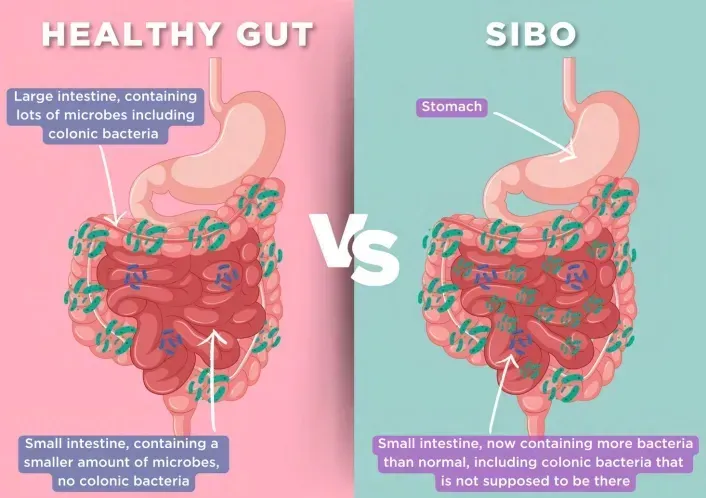
Image Credit: owlstonemedical.com
SIBO, or small intestinal bacterial overgrowth, happens when too many bacteria — or the wrong kind — grow in the small intestine.
The Cleveland Clinic explains that while small amounts of bacteria are normal here, overgrowth leads to gas, pain, and nutrient malabsorption.
Food ferments too early, producing uncomfortable symptoms.
Common signs of SIBO include:
Bloating that worsens after meals
Constipation, diarrhea, or both
Abdominal pain or pressure
Foul-smelling gas or burping
Why IBS Is Often Misdiagnosed as SIBO
Bloating and irregular bowels sound like classic IBS.
But clinical reviews in Alimentary Pharmacology & Therapeutics confirm that a significant number of IBS patients actually have SIBO.
This overlap explains why standard IBS treatments often fail — because they target symptoms, not bacterial imbalance.
Types of SIBO: Hydrogen, Methane, and Hydrogen Sulfide
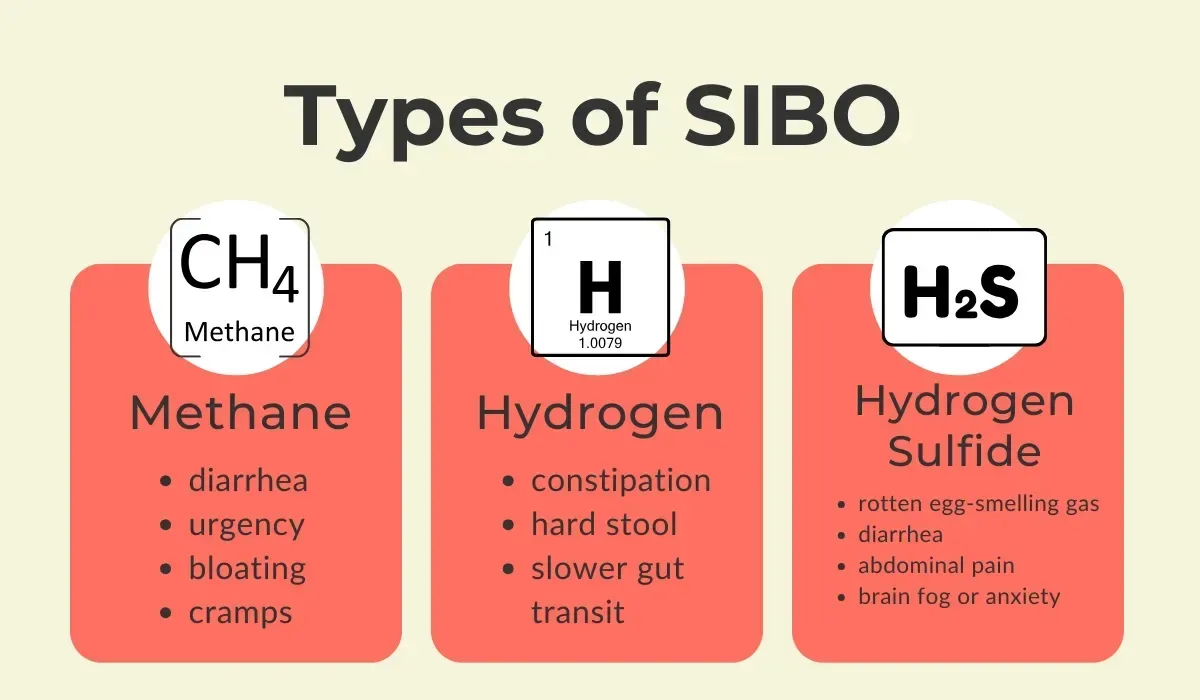
Hydrogen SIBO
Causes diarrhea, urgency, bloating, and cramps. Strongly linked to IBS-D in clinical studies.
Methane SIBO (IMO)
Caused by methane-producing archaea. Leads to constipation, hard stools, and slower gut transit - confirmed by Neurogastroenterology & Motility research.
Hydrogen Sulfide SIBO
Produces rotten egg-smelling gas, diarrhea, abdominal pain, and sometimes brain fog or anxiety. Harder to test — only a few labs, such as the Trio-Smart breath test, measure hydrogen sulfide directly.
Some people have mixed SIBO, with more than one gas type.
That’s why symptoms sometimes swing between constipation and diarrhea.
Causes That Set the Stage for IBS and SIBO

Both IBS and SIBO often develop from overlapping root causes:
Slowed motility: Research in the World Journal of Gastroenterology shows that when gut movement slows due to stress, age, or medication, bacteria have more time to accumulate and overgrow.
Stress: The American Journal of Gastroenterology highlights how stress hormones like cortisol alter gut contractions and sensitivity, making flare-ups worse.
Low stomach acid: Acid-blocking medications reduce stomach acid, which normally helps prevent bacteria from colonizing the small intestine.
Microbiome imbalance: A study in Nature Microbiology found that transferring microbiota from IBS patients into mice caused IBS-like symptoms, showing just how much microbial balance drives gut health.
How to Tell If It’s IBS or SIBO
Here are signs that suggest SIBO instead of IBS:
Bloating after most meals → fermentation in the small intestine
Chronic constipation and distension → methane SIBO
Frequent diarrhea or foul-smelling gas → hydrogen or hydrogen sulfide SIBO
The most reliable test is a lactulose or glucose breath test. The North American Consensus sets positive cutoffs at ≥20 ppm hydrogen or ≥10 ppm methane.
For background on gut healing, revisit IBS in Women: What Really Causes It and How to Finally Heal Your Gut Naturally.
Why Conventional IBS Treatment Falls Short

Fiber or probiotic supplements, stress management, or standard medications may ease symptoms, but they don’t address bacterial imbalance.
That’s why so many people with “IBS” continue to struggle — the true culprit may be SIBO.
Diet plays an important role in managing symptoms and preventing flare-ups, but it won’t clear SIBO by itself.
To heal fully, the bacterial overgrowth needs to be removed — otherwise the symptoms keep coming back or will persist, no matter how carefully you eat.
Why a Gut Reset Works Better Than Quick Fixes
Telling people to “eat more fiber” or “reduce stress” rarely fixes root causes.
IBS and SIBO require a sequence:
Calm inflammation
Heal the gut barrier
Eradicate overgrowth
Prevent further fermentation/growth
Rebuild microbial diversity
That’s why I developed the 28 Day Gut Reset — a complete program designed to restore balance step by step.
And with new updates, it now includes options to naturally target and support the eradication of different types of SIBO, making it more effective than ever.
Lifestyle Habits That Support Gut Health

Even after treatment, daily habits are key:
Stress management — cortisol spikes can worsen gut issues.
Sleep — restores the gut microbiome.
Exercise — movement improves motility and supports microbial balance.
Diet variety — diversity of plants feeds beneficial bacteria once symptoms calm.
Take Back Control of Your Gut
If you’ve tried IBS treatments without success, it may not be IBS at all — it could be SIBO.
Instead of chasing symptoms, the answer is a step-by-step reset that clears bacterial overgrowth, restores balance, and builds resilience.
That’s exactly what the 28 Day Gut Reset is designed to do — giving you a clear, structured path beyond the label of a diagnosis, so you can finally move forward without being defined by bloating, constipation, or fatigue.

Sunel Visser
Sunel’s journey with gut health began while living in Thailand, when she developed severe digestive issues.
Determined to find a natural, lasting solution — without antibiotics or 'cop out' medical labels — she dedicated herself to deep research and experimentation.
The result was a transformative protocol that restored her digestive health, stabilized her weight fluctuations, and improved her immune system and overall quality of life - since 2014.
Sunel holds a degree in Sport Science, an Honours degree in Psychology, is a Certified Personal Trainer, Certified Strength and Conditioning Specialist, and has an Advanced Certificate in Nutritional Counseling.
Quick links
Contact
sunel@sunelvfitness.com
+27 84 558 7015